



What Does an Ophthalmic Medical Technician Do?
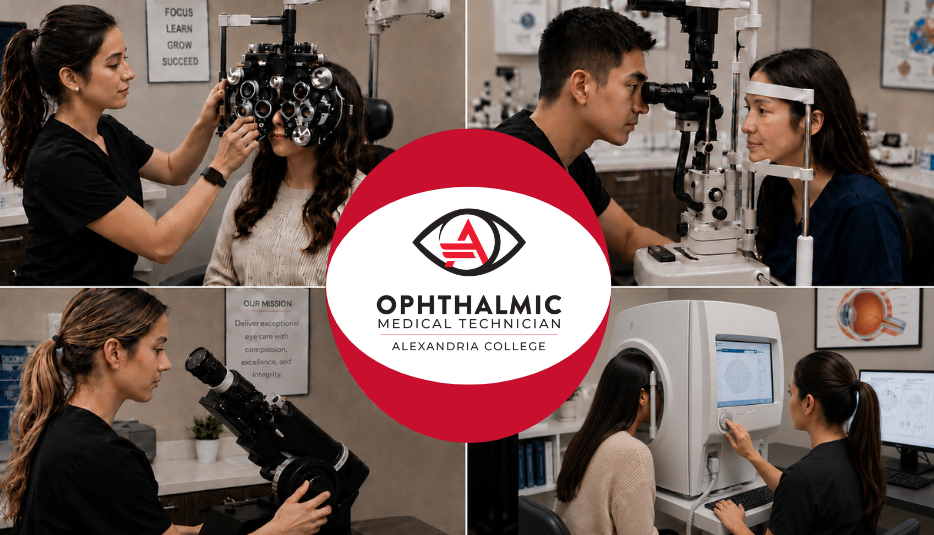
If you’ve ever visited an ophthalmologist, chances are you spent more time with an ophthalmic medical technician than with the doctor. Ophthalmic medical technicians are specially trained allied health professionals who work alongside ophthalmologists; physicians and surgeons specializing in the medical and surgical care of the eye. They guide patients through nearly every step of their visit while performing specialized diagnostic testing that supports the ophthalmologist’s diagnosis and treatment plan.
By Kimberly Barblock, COT
Ophthalmic Medical Technician Program Director
For individuals seeking a rewarding healthcare career that combines patient care, advanced technology, and lifelong learning, becoming an ophthalmic medical technician can be an excellent choice.
Starting the Day
No two days are exactly the same in an ophthalmology practice, but each day begins with preparing to provide safe, efficient, and compassionate patient care.
The day often begins by preparing examination rooms, calibrating diagnostic equipment, reviewing the schedule, and ensuring instruments are cleaned and disinfected.
Welcoming Patients
One of the first responsibilities of an ophthalmic medical technician is greeting patients and helping them feel comfortable.
The technician reviews each patient’s medical and ocular history, updates medications, documents symptoms, and records the reason for the visit. Whether a patient is coming in for a routine eye examination, cataract evaluation, glaucoma follow-up, diabetic eye exam, or an eye emergency, gathering accurate information is essential.
Effective communication skills, professionalism, and empathy help establish trust from the very beginning of the visit.
Performing Preliminary Testing
Before the ophthalmologist begins their examination, the technician performs many of the clinical tests needed to evaluate the patient’s vision and eye health.
Depending on the patient’s needs, these tests may include:
- Measuring visual acuity (how clearly the patient sees)
- Evaluating pupils
- Assessing eye muscle function and eye alignment
- Performing confrontation visual field testing
- Measuring a patient’s eyeglass prescription using a manual lensmeter
- Performing refractions to help the ophthalmologist determine the best prescription for a patient’s eyeglasses and contact lenses
- Measuring intraocular pressure (eye pressure)
- Administering ophthalmic medications, such as dilating eye drops, when appropriate
- Performing optical coherence tomography (OCT)
- Conducting automated visual field testing
- Assisting with additional diagnostic procedures ordered by the ophthalmologist
These tests provide valuable information that helps the physician diagnose, monitor, and treat eye diseases.
Working with Advanced Technology
One of the most exciting aspects of ophthalmology is the opportunity to work with cutting-edge diagnostic equipment.
Ophthalmic medical technicians use advanced technology every day to evaluate eye health and monitor conditions such as glaucoma, diabetic retinopathy, macular degeneration, retinal diseases, and cataracts.
Learning to operate these sophisticated instruments requires specialized education, supervised clinical training, and ongoing professional development. Many technicians enjoy combining patient interaction with technology throughout their workday.
Assisting in Surgery
While some ophthalmic medical technicians work in clinics, others assist with advanced ophthalmic procedures and surgeries. Depending on the practice, technicians may help prepare patients for procedures, ensure specialized equipment is ready for use, maintain a sterile environment, and assist the ophthalmologist throughout treatment.
One exciting subspecialty is LASIK laser vision correction surgery. In LASIK practices, specially trained ophthalmic medical technicians often work alongside the ophthalmologist before, during, and after surgery. Their responsibilities may include preparing patients, providing education and reassurance, positioning patients for treatment, and operating highly specialized laser systems under the surgeon’s direction. Depending on the practice and the technician’s training, this may include both femtosecond lasers, which create the corneal flap, and excimer lasers, which precisely reshape the cornea to correct refractive errors such as nearsightedness, farsightedness, and astigmatism.
Not every ophthalmic medical technician works in refractive surgery, but this is just one example of the diverse and technologically advanced career opportunities available within ophthalmology.
Assisting the Ophthalmologist
Once preliminary testing is complete, the ophthalmologist joins the patient examination.
The technician often assists by documenting the doctor’s findings in the patient’s electronic medical record, preparing additional equipment, and ensuring the physician has the information needed to make informed treatment decisions.
This teamwork allows appointments to flow efficiently while providing patients with exceptional care.
Educating Patients
Patient education is another important part of the job.
Technicians help patients understand:
- How to use prescribed eye medications
- What to expect after dilation
- Contact lens instructions for safe insertion and removal
- Surgical preparation and recovery
- Follow-up appointments
- Home care recommendations
Helping patients feel informed and confident is one of the most rewarding aspects of the profession.
Every Patient Is Different
Ophthalmic medical technicians care for patients of all ages.
On any given day, they may assist:
- A child receiving their first comprehensive eye examination
- A teenager being fitted for specialty contact lenses
- An adult preparing for LASIK surgery
- A person with diabetes receiving retinal screening
- A senior being evaluated for cataract surgery
- A patient experiencing sudden vision loss or an eye injury
Technicians may choose to work in comprehensive ophthalmology or specialize in areas such as retina, glaucoma, pediatrics, oculoplastics, cornea, neuro-ophthalmology, refractive surgery, or ophthalmic imaging. No two days are exactly alike, making ophthalmic medical technology a dynamic and continually rewarding profession.
A Career with Meaning
Many ophthalmic medical technicians say the most rewarding part of their job is helping patients preserve one of their most valuable senses: their vision.
“I’m grateful to be part of a profession that connects care, compassion, and vision to change lives. I especially enjoy working with kids and helping make their visits fun and comfortable, but I also love that I get to see and learn from patients of all ages. Connecting with different people every day is one of the most rewarding parts of working in eye care.” ~OPMT Student, Karley A. |
Whether reassuring an anxious patient before surgery, helping someone see more clearly with updated glasses, or assisting in the diagnosis of a sight-threatening disease, technicians make a meaningful difference every day.
As the population ages and the demand for eye care continues to grow, skilled ophthalmic medical technicians are increasingly sought after in practices across the country.
How Do You Become an Ophthalmic Medical Technician?
At Alexandria Technical & Community College (ATCC), the Ophthalmic Medical Technician (OPMT) Program prepares students for this exciting career through a unique hybrid-online Associate of Applied Science degree.
Students learn through a combination of online coursework, laboratory instruction, and supervised clinical rotations in ophthalmology practices close to home, preparing them for both certification and employment.
Graduates are prepared to pursue professional certification and begin rewarding careers in ophthalmology practices, specialty clinics, hospitals, ambulatory surgery centers, academic medical centers, and the eye care industry.
Is This Career Right for You?
If you enjoy technology, healthcare, and working closely with people, ophthalmic medical technology may be an excellent career choice.
It offers the opportunity to build lasting patient relationships, work with cutting-edge diagnostic equipment, continue learning throughout your career, and make a meaningful impact on patients’ lives every day.
Ready to Learn More?
If you’re interested in becoming an ophthalmic medical technician, we invite you to explore the Ophthalmic Medical Technician Program at Alexandria Technical & Community College.
With flexible hybrid-online coursework, local clinical rotations, experienced faculty, and a strong commitment to student success, ATCC can help you turn your interest in healthcare, technology, and helping others into a rewarding career caring for patients’ vision.
CLEAR VISION, BRIGHT FUTURES: EDUCATING OPHTHALMIC TECHNICIANS
Recent News:
-
ATCC Students Receive Chime Workforce Scholarships
October 21, 2026 | 5:36 PM -
Industry Partners Support Diesel Student Training
October 21, 2026 | 1:55 PM -
ATCC Takes Home Two Silver Medallion Awards for Outstanding Work in Marketing and Communications
October 16, 2026 | 12:09 PM