



Ophthalmic Medical Technician Blogs:
Inside the Technology That Helps Save Sight
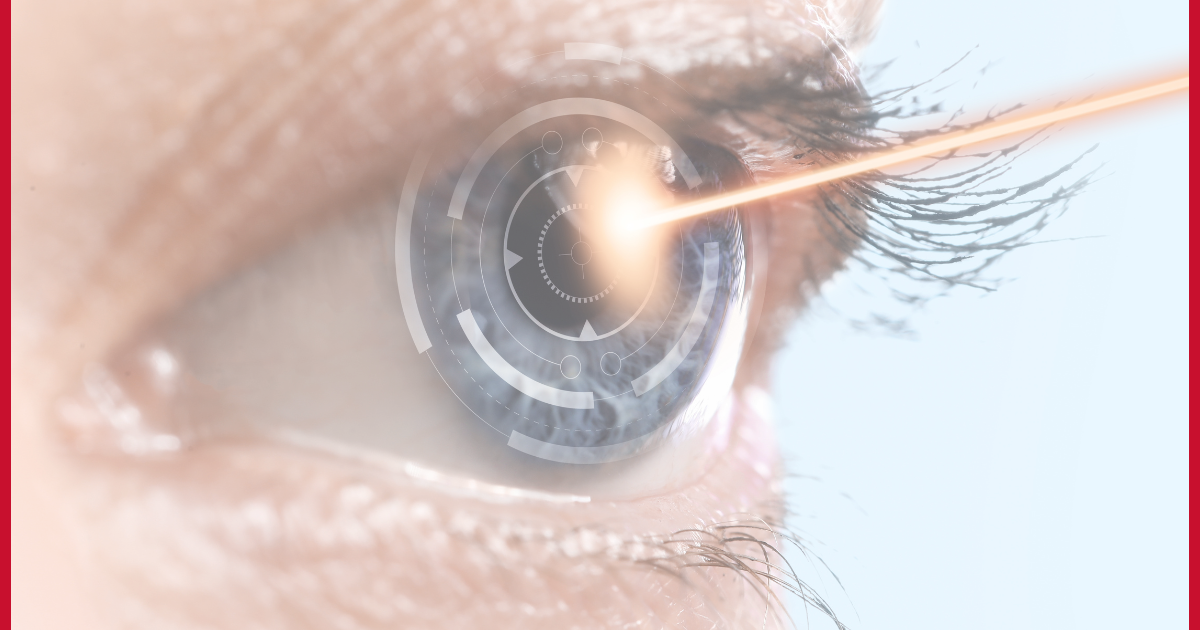
Step into a modern ophthalmology clinic and you’ll quickly discover that eye care is about much more than reading letters on an eye chart. Today’s ophthalmic medical technicians (OMTs) work with an impressive range of sophisticated technology. This includes instruments that create detailed cross-sectional images of the retina and devices that measure the eye with remarkable precision before cataract surgery. For anyone who loves both healthcare and technology, ophthalmology offers something special: the opportunity to work hands-on with advanced equipment while using that technology to help protect and preserve patients’ vision.
By Kimberly Barblock, COT
Ophthalmic Medical Technician Program Director
A High-Tech Look Inside the Eye
As one of the smallest organs in the body, examining the eye requires incredibly advanced technologies. Ophthalmic medical technicians perform and assist with many of these tests every day, helping ophthalmologists gather the information they need to diagnose disease, monitor changes, and determine treatment.
Here are just some of the technologies you’ll find in an ophthalmology clinic.
Optical Coherence Tomography (OCT)
One of the most important advances in ophthalmic imaging is Optical Coherence Tomography, better known as OCT.
Using infrared light, OCT produces highly detailed cross-sectional images of structures inside the eye. Technicians can capture images of the individual layers of the retina and obtain detailed measurements of the optic nerve and retinal nerve fiber layer.
OCT has become an essential tool for diagnosing and monitoring conditions such as:
- Age-related macular degeneration
- Diabetic macular edema
- Glaucoma
- Macular holes
- Epiretinal membranes
- Other retinal and optic nerve disorders
Advanced OCT systems can also perform OCT angiography (OCT-A), allowing clinicians to visualize blood flow within the retina and choroid without traditional injected dye.
For ophthalmic technicians, capturing a scan is only part of the job. They must understand proper patient positioning, ocular anatomy, scan quality, segmentation, artifacts, and know when an image needs to be repeated.
Visual Field Testing
Not all vision problems can be identified by reading letters on an eye chart. While visual acuity testing measures how clearly a patient sees straight ahead, it does not evaluate the full extent of their visual function. Many eye diseases affect peripheral vision long before changes in central vision become noticeable.
The Zeiss Humphrey Field Analyzer (HFA) measures a patient's visual field, including areas of peripheral vision. Automated perimetry is particularly important in the diagnosis and management of glaucoma but can also provide valuable information about neurological and retinal conditions.
The technology is sophisticated, but successful testing still depends heavily on the technician.
OMTs must position and instruct patients carefully, monitor fixation and reliability, recognize common testing problems, and determine when a test may need to be repeated.
Corneal Topography and Tomography
The cornea may look like a simple clear window at the front of the eye, but its shape can be mapped in extraordinary detail.
Corneal topography and tomography systems create detailed maps and measurements of the cornea. These technologies are used in the evaluation of conditions such as keratoconus and are important in LASIK procedures and cataract surgery planning.
Depending on the technology used, ophthalmic technicians may capture information about corneal curvature, elevation, thickness, and other characteristics that help ophthalmologists make important clinical and surgical decisions.
Ophthalmic Ultrasound
Ultrasound plays a vital role in ophthalmology, providing both precise measurements and diagnostic imaging when other tools may be limited.
A-Scan Biometry and IOL Calculations
Cataract surgery doesn't simply remove a cloudy natural lens. In most cases, it replaces that lens with an artificial intraocular lens (IOL).
Determining the appropriate IOL power requires extremely precise measurements. A-scan biometers use ultrasound to measure critical characteristics of the eye that are used in IOL power calculations. Accurate measurements are essential because even slight variations can affect a patient's visual outcome after cataract surgery.
For technicians working in cataract and refractive surgery practices, biometry is an important and highly technical part of patient care.
B-Scan Ultrasonography
What happens when an ophthalmologist can't see inside the eye?
That's where ophthalmic ultrasound becomes especially valuable. B-scan ultrasonography uses sound waves to create images of structures inside the eye, even when the view is obscured by a dense cataract, vitreous hemorrhage, or other media opacity.
In these situations, B-scan imaging helps physicians evaluate the retina, vitreous, and other internal structures that cannot be visualized directly.
Lasers and Surgical Technology
The technology doesn’t stop in the exam lane.
Ophthalmology is also a highly advanced surgical specialty. Depending on where they work and their level of training, ophthalmic technicians may encounter technologies used in cataract, glaucoma, retinal, and refractive surgery.
These can include excimer and femtosecond lasers used in LASIK surgery, ophthalmic surgical microscopes, phacoemulsification systems used during cataract surgery, and a growing range of laser and digital technologies.
Technicians may help prepare patients, equipment, instruments, and the surgical environment while working alongside ophthalmologists and other members of the surgical team.
Technology helps save sight.Skilled ophthalmic technicians help make it possible.
|
One of the most important lessons in ophthalmology is that pressing a button isn’t the same as performing a valid test.
A sophisticated OCT scan with poor centration or an artifact may not provide the information the ophthalmologist needs. An unreliable visual field can lead to misleading results. Inaccurate measurements before cataract surgery can affect surgical planning. That’s why ophthalmic medical technicians need to understand more than which button to push.
They learn why a test is being performed, how to properly position and instruct the patient, how to recognize unreliable results, when testing should be repeated, and how the information fits into the patient’s overall eye examination.
Ophthalmic technology is impressive, but it is the technician's knowledge, critical thinking, and skill that transform measurements into better patient outcomes.
Learning the Technologies Behind Modern Eye Care
Students in the Ophthalmic Medical Technician Program at Alexandria Technical & Community College prepare to work in this rapidly evolving environment through a combination of online coursework and hands-on clinical experience.
Throughout the program, students build knowledge and skills in areas such as visual field testing, extraocular muscle and pupil evaluation, retinoscopy and refraction, tonometry, ophthalmic imaging, equipment care and maintenance, surgical assisting, and other diagnostic procedures.
Supervised clinical rotations with qualified preceptors allow students to work directly with patients in real ophthalmology practices while putting classroom learning into action. Through hands-on patient care experiences, students develop confidence using ophthalmic technology, performing diagnostic procedures, and supporting the eye care team.
Where Healthcare Meets Technology
For students who are fascinated by science and technology but also want a career centered around people, ophthalmic medical technology offers an ever-changing mix of clinical challenges and advanced diagnostic testing.
One patient may need an OCT to monitor macular degeneration. The next may need a visual field to evaluate glaucoma. Another may be undergoing precise measurements in preparation for LASIK or cataract surgery.
As ophthalmic technology continues to advance, the profession continues to evolve with it.
That’s part of what makes a career as an ophthalmic medical technician so interesting: there is always something new to learn.
See What’s Possible in Ophthalmic Medical Technology
The Ophthalmic Medical Technician Program at Alexandria Technical & Community College offers a hybrid-online Associate of Applied Science degree that combines flexible online learning with hands-on experience through supervised clinical rotations.
Graduates are prepared to enter an in-demand, technology-driven healthcare profession and are eligible to sit for IJCAHPO’s intermediate-level Certified Ophthalmic Technician (COT) certification examination.
If you’re looking for a career that combines advanced technology, critical thinking, patient care, and the opportunity to help protect sight, ophthalmic medical technology may be the career you’ve been looking for. Learn more about the Ophthalmic Medical Technician Program at ATCC and discover where healthcare, technology, and a passion for helping others come together.
CLEAR VISION, BRIGHT FUTURES: EDUCATING OPHTHALMIC TECHNICIANS
Out-of-State Students:
Students from outside Minnesota who are interested in taking this program online should verify that the program is recognized in their home state.
Minnesota's Global Military Learning Network: Military Bridge Available!
Military bridge programs through Minnesota's Global Military Learning Network (MN-GMLN) provide opportunities for U.S. military service members who have trained in specific occupations to use their training as college credit toward specific degrees, maximizing credit transfer and saving time and money toward a civilian degree.