



Ophthalmic Medical Technician Blogs:
Why Hiring an Ophthalmic Student Makes Good Business Sense
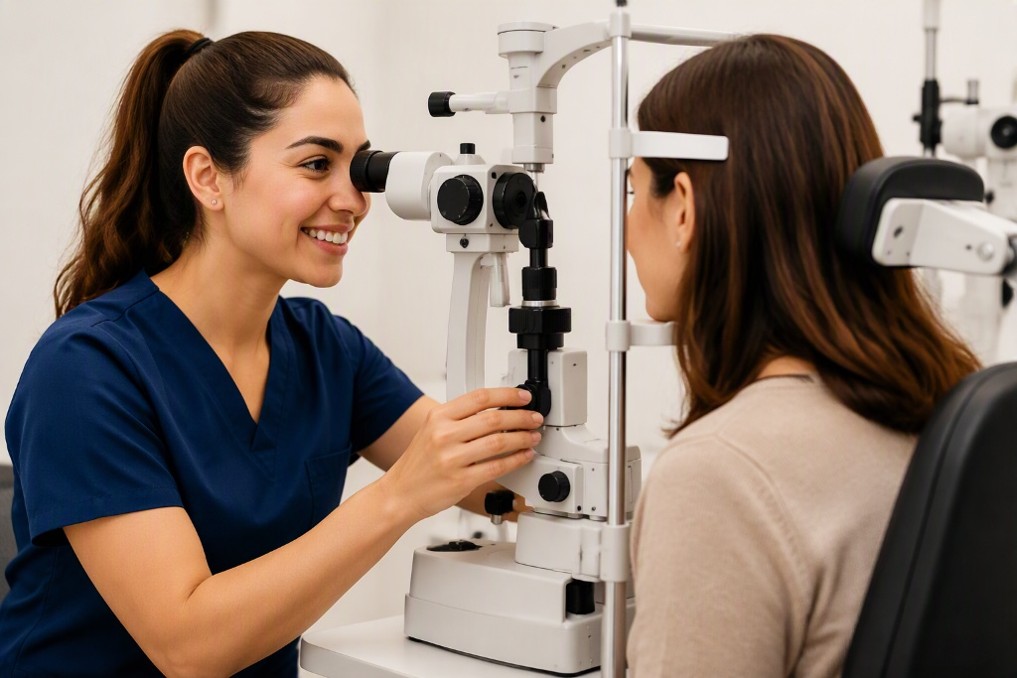
Hiring ophthalmic students can help clinics address staffing challenges while developing future professionals who are already committed to careers in eye care. Through a combination of classroom learning, clinical training, and real-world experience, these students bring growing knowledge and long-term potential to practices while helping strengthen the ophthalmic workforce for years to come.
By Kimberly Barblock, COT
Ophthalmic Medical Technician Program Director
Across the country, ophthalmology practices continue to face a significant challenge: finding and retaining qualified ophthalmic personnel. Many clinics have responded by hiring entry-level employees and training them on the job, often with good intentions and varying degrees of success.
Every year, ophthalmology practices invest significant time training new employees from the ground up. When clinics are already hiring individuals with no prior ophthalmic experience, hiring an ophthalmic student often requires no greater initial investment while offering substantially greater long-term return.
While this approach may fill an immediate staffing need, it frequently creates a cycle of ongoing recruitment, training, and turnover. Many individuals who enter ophthalmology with no prior exposure to the field are still exploring career options. As a result, clinics invest substantial time and resources training employees who may ultimately pursue a different profession.
At the same time, ophthalmic educational programs depend on clinical partners to provide meaningful training experiences for students preparing to enter the profession. These goals are not competing interests. In fact, they are strongly aligned.
Hiring an ophthalmic student can provide clinics with a practical staffing solution while simultaneously strengthening the future ophthalmic workforce.
OPMT Students Have Already Chosen Ophthalmology
One of the greatest advantages of hiring a student from a formal ophthalmic technician training program is commitment.
Unlike many entry-level applicants who are still deciding on a career path, ophthalmic students have already invested significant time, effort, and resources into pursuing a profession in ophthalmology. They have enrolled in a specialized educational program because they intend to build a career in eye care.
That commitment matters.
Every time an employee leaves, clinics must restart the hiring, onboarding, and training process. Recruiting and training replacements consume valuable staff time, disrupt workflow, and delay productivity. Hiring individuals who have already committed to ophthalmology as a career can help reduce this cycle.
When clinics hire students who have intentionally chosen ophthalmology as their profession, they are often recruiting future long-term employees rather than temporary staff members. Greater career commitment can translate into improved retention, greater return on training investments, and enhanced workforce stability.
A Different Way to Think About Workforce DevelopmentRather than hoping an entry-level hire discovers a passion for ophthalmology after joining your practice, consider hiring someone who has already chosen the profession. Ophthalmic students have invested their time, effort, and resources into building a career in eye care. For clinics seeking to develop a stable, skilled workforce, they represent a valuable long-term investment. |
Students Bring Structured Education from Day One
Even students without prior experience entering their first semester arrive with a different mindset than the average entry-level hire.
They understand that they are being trained for a profession. They are simultaneously learning foundational concepts in ophthalmology, patient care, professionalism, medical terminology, infection control, and healthcare operations.
As students progress through the program, they continually bring new knowledge and skills back to the clinic environment.
Instead of learning exclusively through informal workplace training, they benefit from a combination of classroom instruction, simulation activities, and supervised clinical practice. This creates a stronger foundation for long-term professional growth.
Clinical Rotations and Employment Can Work Together
A common concern among clinics is finding time and resources to support student clinical rotations, particularly given direct supervision requirements.
When a student is also employed by the clinic, however, clinical rotations often become much easier to manage.
For example, first-semester students are required to complete eight clinical hours per week.
Traditionally, this may involve assigning a full eight-hour day or two four-hour shifts.
For students balancing school, family responsibilities, and part-time employment, scheduling multiple separate rotation days can be challenging.
When students are employees, clinics gain considerably more flexibility. Clinical rotation hours can be incorporated into the employee's regular work schedule and completed across the week in a manner that best supports clinic operations.
Rather than arranging special rotation days, clinics can integrate training into normal workflows while maintaining greater control over scheduling and staffing needs.
What Clinical Partners Are Saying"As a rural practice, recruiting experienced ophthalmic personnel can be challenging. Partnering with the program allows us to develop future skilled technicians who are committed to ophthalmology as a long-term career." ~Val Selness, COE, ABOC, Practice Manager Fischer Laser Eye Center |
A More Efficient Pathway to Developing Future Technicians
Many ophthalmology practices report difficulty advancing employees beyond basic ophthalmic skills due to staffing demands and limited training time.
When clinics are already operating with a reduced workforce, finding opportunities to provide advanced training can be difficult. As a result, some employees remain at entry-level competency levels longer than intended, and certification goals may be delayed or never pursued.
Ophthalmic students are different.
Their educational program provides structured progression over multiple semesters, with increasing expectations for knowledge, technical skills, professionalism, and clinical competency. Clinics do not carry the entire responsibility for developing these individuals. Instead, they partner with the formal training program in preparing a future ophthalmic professional.
This shared approach allows students to grow while reducing some of the educational burden placed solely on clinic staff.
Clinical Partners Are Investing in Their Own Future Workforce
Every student who successfully completes a clinical rotation today has the potential to become tomorrow's certified ophthalmic assistant, certified ophthalmic technician, lead technician, clinic manager, educator, or ophthalmic administrator.
One of our clinical partners initially agreed to host a student to gain a better understanding of what it would be like to participate in a formal ophthalmic training program. The student exceeded expectations with both clinical knowledge and patient care skills. After graduating, the student accepted a full-time position with the practice and continues to be a valued member of the team. The clinic has since welcomed another student, viewing participation in the program as an effective way to recruit, develop, and retain future ophthalmic technicians.
The ophthalmic profession cannot grow without clinical training opportunities. Educational programs provide the foundation, but clinical partners transform students into competent professionals through real-world experience and mentorship.
By supporting students, clinics are not simply helping a college program succeed. They are helping develop the next generation of ophthalmic personnel who will ultimately support practices throughout their communities and regions.
A Win-Win Opportunity
Hiring an ophthalmic student offers advantages for both students and clinics:
For Clinics
- Access to motivated individuals committed to ophthalmology as a career
- Potential for improved employee retention
- Reduced recruitment and turnover costs
- Flexible scheduling of clinical rotation requirements
- Opportunity to develop future certified personnel
- Strengthened connection to the local ophthalmic workforce pipeline
For Students
- Paid experience while completing educational requirements
- Increased exposure to real-world ophthalmic practice
- Enhanced skill development and confidence
- Stronger professional relationships and mentorship opportunities
- Increased employment opportunities after graduation
The Future of Ophthalmology Depends on Partnership
The shortage of ophthalmic technicians is not likely to be solved through recruitment alone. Sustainable workforce development requires collaboration between educational programs and clinical partners.
When clinics hire and mentor ophthalmic students, they are not simply filling an open position. They are investing in individuals who have chosen ophthalmology as their profession and are actively preparing for long-term careers in eye care.
Together, educational programs and clinical partners can build a stronger, more stable ophthalmic workforce, one student at a time.
What Sets Alexandria College's Ophthalmic Medical Technician Program Apart?
While the benefits of hiring ophthalmic students apply to students from accredited programs across the country, the Ophthalmic Medical Technician (OPMT) Program at Alexandria Technical & Community College offers several unique advantages for employers and clinical preceptors. Our program utilizes a hybrid-online model that allows students from across Minnesota and throughout the United States to pursue ophthalmic education while remaining in their local communities. This approach helps expand the ophthalmic workforce in both rural and underserved areas where recruitment can be particularly challenging.
This model is especially valuable for rural practices, where recruiting experienced ophthalmic personnel can be difficult. By partnering with the OPMT Program, clinics have an opportunity to develop future skilled technicians who are committed to ophthalmology as a long-term career. Rather than waiting for trained candidates to become available, practices can help build the workforce they need while supporting the next generation of eye care professionals.
In addition, our curriculum is designed to prepare students at the intermediate technician level. While on-the-job training can successfully prepare employees for entry-level roles, workforce demands often leave limited time for advancement. As a result, many employees remain at the assistant level and may never pursue professional certification. In contrast, OPMT students follow a structured pathway designed to prepare them for intermediate-level practice and eligibility for the International Joint Commission on Allied Health Personnel in Ophthalmology (IJCAHPO) Certified Ophthalmic Technician (COT) examination. This preparation positions graduates for continued professional growth and expanded contributions to patient care.
As the ophthalmic technician shortage continues, partnering with educational programs offers clinics an opportunity to develop a more stable, skilled, and certified workforce. If your practice has entry-level ophthalmic positions available, we encourage you to consider hiring an ophthalmic student and integrating clinical rotations into their employment experience.
By becoming a clinical preceptor site, your practice can help shape the next generation of ophthalmic professionals while building a pipeline of motivated future employees who have already committed themselves to a career in eye care.
Interested in hiring an ophthalmic student, becoming a clinical preceptor, or both? Contact Kimberly Barblock, Ophthalmic Program Director, at Kimberly.Barblock@alextech.edu to learn more about partnering with the OPMT Program.
Together, we can strengthen the ophthalmic workforce and improve access to quality eye care for the patients and communities we serve.
CLEAR VISION, BRIGHT FUTURES: EDUCATING OPHTHALMIC TECHNICIANS
Out-of-State Students:
Students from outside Minnesota who are interested in taking this program online should verify that the program is recognized in their home state.
Minnesota's Global Military Learning Network: Military Bridge Available!
Military bridge programs through Minnesota's Global Military Learning Network (MN-GMLN) provide opportunities for U.S. military service members who have trained in specific occupations to use their training as college credit toward specific degrees, maximizing credit transfer and saving time and money toward a civilian degree.